Our History
Discover the unique, 30-year story of Stone Man Park—from its 1996 party barge origins to its evolution into the legendary Music Camp.
How We Got Here
“Whatever floats your boat…”
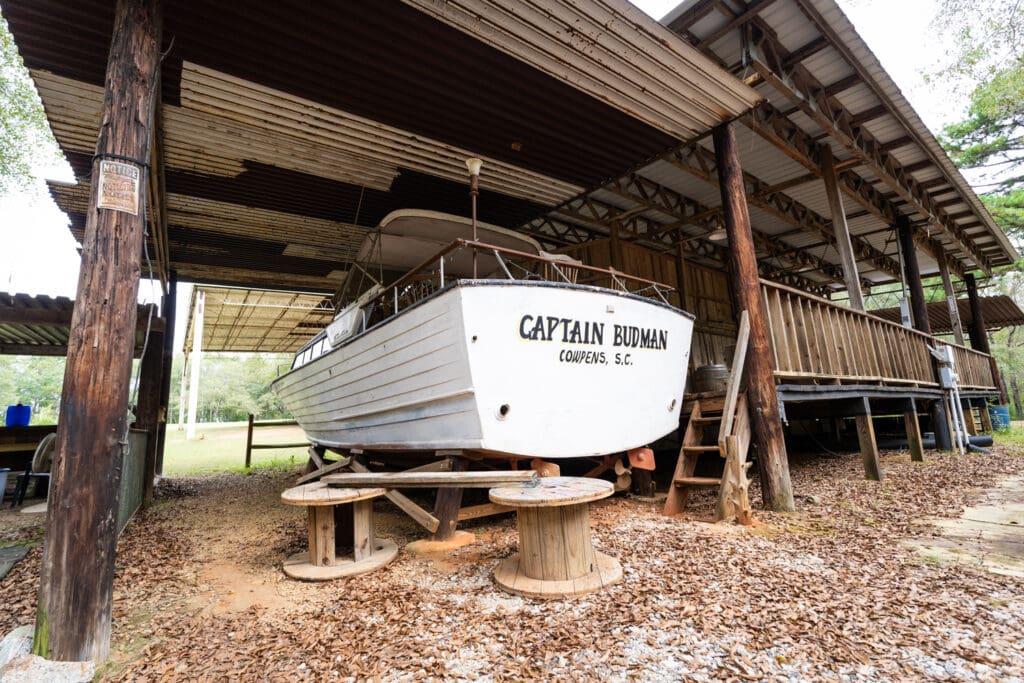
Had a 47-year-old John Featherston not been given a ragged 1968 Chris Craft boat to be used as a party barge for his wife Lisa and their friends, this park would likely have never been conceived.
While wondering out loud about waterfront property on the Pacolet River, a colorful Cowpens used car salesman told John he knew where a parcel just went up for sale in the Cannons Campground community. After buying the land, John talked him out of the boat on the rear of his car lot.
Now what to do with it?
Join us on this trip down memory lane where this antique vessel sailed its way onto dry land and helped inspire what would become known to concert lovers as the Music Camp. As we approach the 30th anniversary, that hidden gem is being polished and shined for its big reveal: as a community arts and environmental community center, Stone Man Park.
The Path We've Forged
1996
Buying the Land
The Bruckner family, owners of a German textile machinery company, offered John the property for $900 per acre. His idea was to divide and sell most of it, but his father, Dr. John S. Featherston, Sr., got wind of this and said, “You’ll inherit funds someday, would you like them now to buy this property?” John’s inheritance came with a request: that he give back to the community, especially those with fewer opportunities.
John roughed in an access road, intending to move the “Captain Budman” boat riverside and build a picnic shed around it. But locals had trashed the area, so a new site was selected on a ridge. It was too windy and cold, so site number three was found. A fairly level area with scrub pines was selected, but the man with the equipment misunderstood and cleared much more than intended.
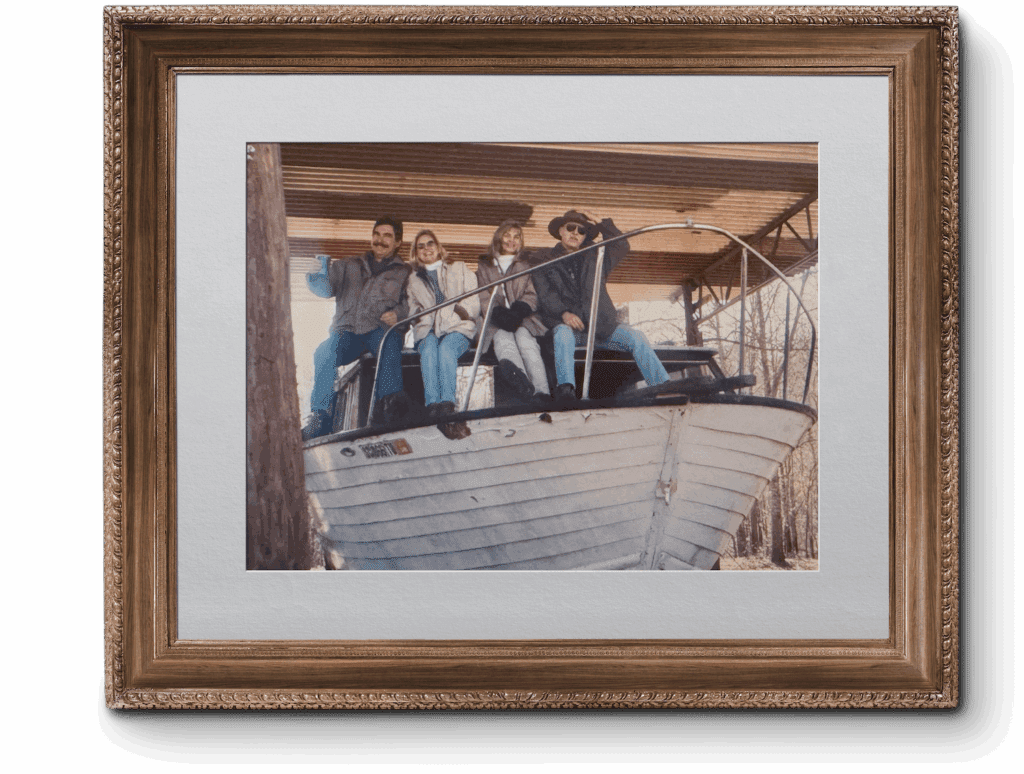
The “Captain Budman” as it sits today.
1997
Scrounging Up a Stage
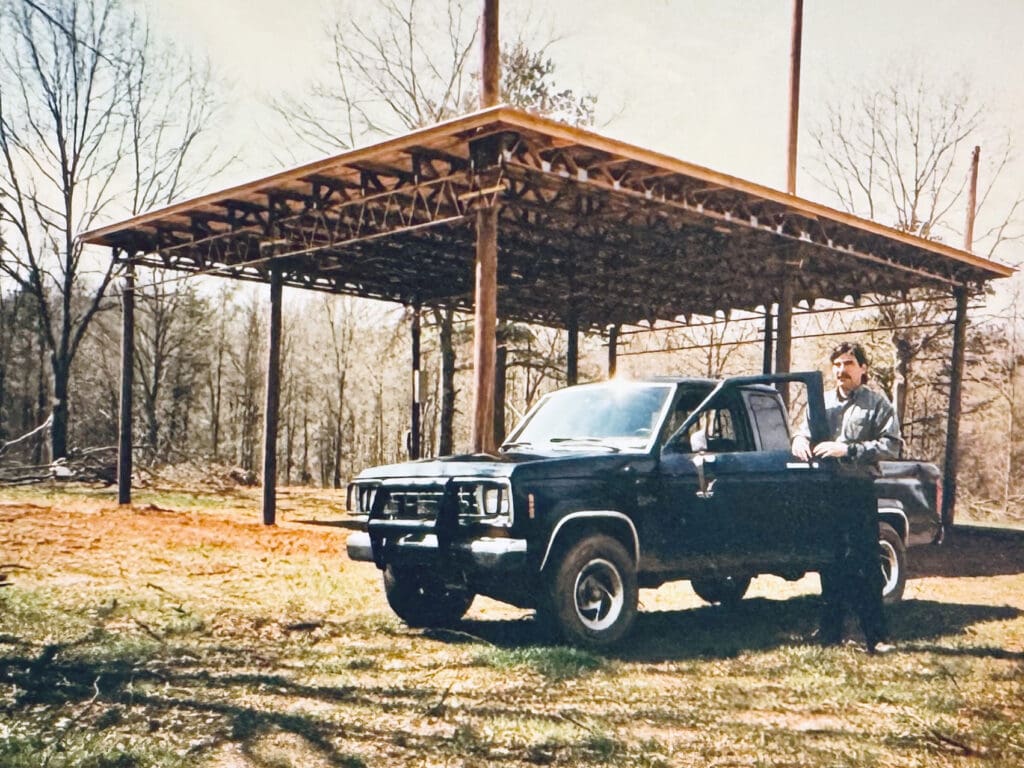
John and friends built a large covered deck for parties, with room for the boat, tractor, and cookers. A friend offered wooden trusses; John gave another a case of beer to haul them. Then steel trusses showed up from the old Cannons elementary school. Upright telephone poles were donated and delivered by another friend.
As the flooring (heavy boards donated from Lockhart Mills) went down, they realized there was enough material to floor the entire expanse. The boat got pushed out to the side. This became the main stage, known as the Greenfield Excursion Stage, named after a ’60s local band.
John standing next to the first structure, the Greenfield Excursion stage.
John then heard about structural metal beams needing removal from Freightliner Gaffney within two days. A friend with a favor owed from a machinery company delivered the huge steel for free. This became the audience shelter. A fond memory for John and his mother was when a welder sang arias in a beautiful baritone voice while working.
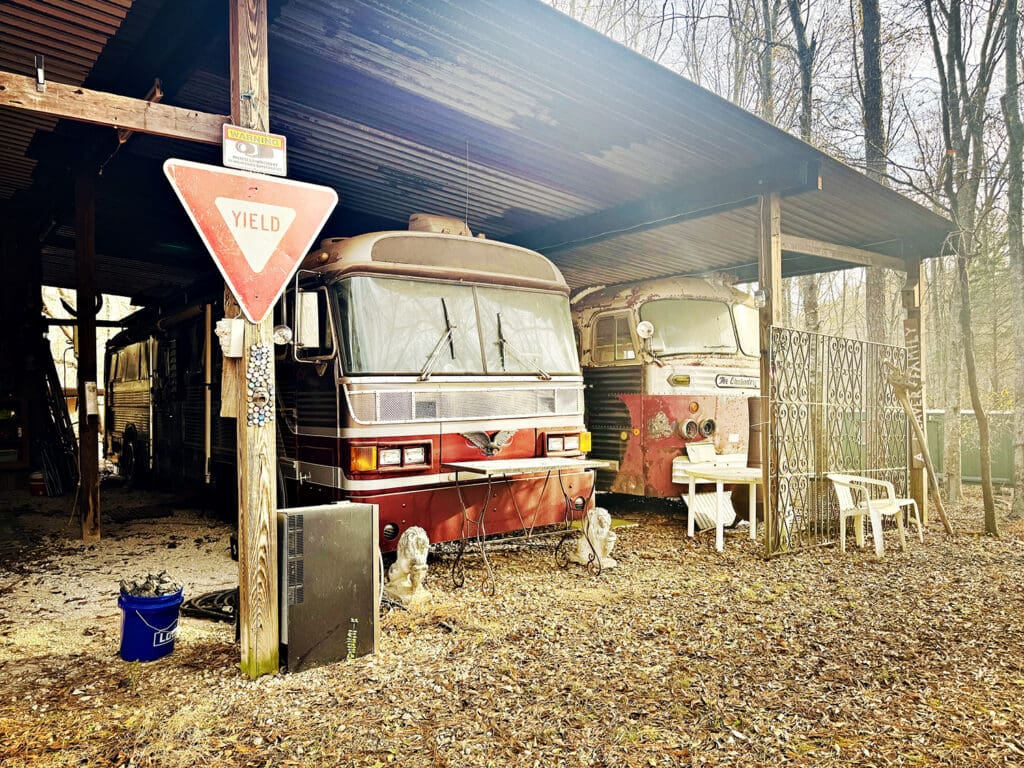
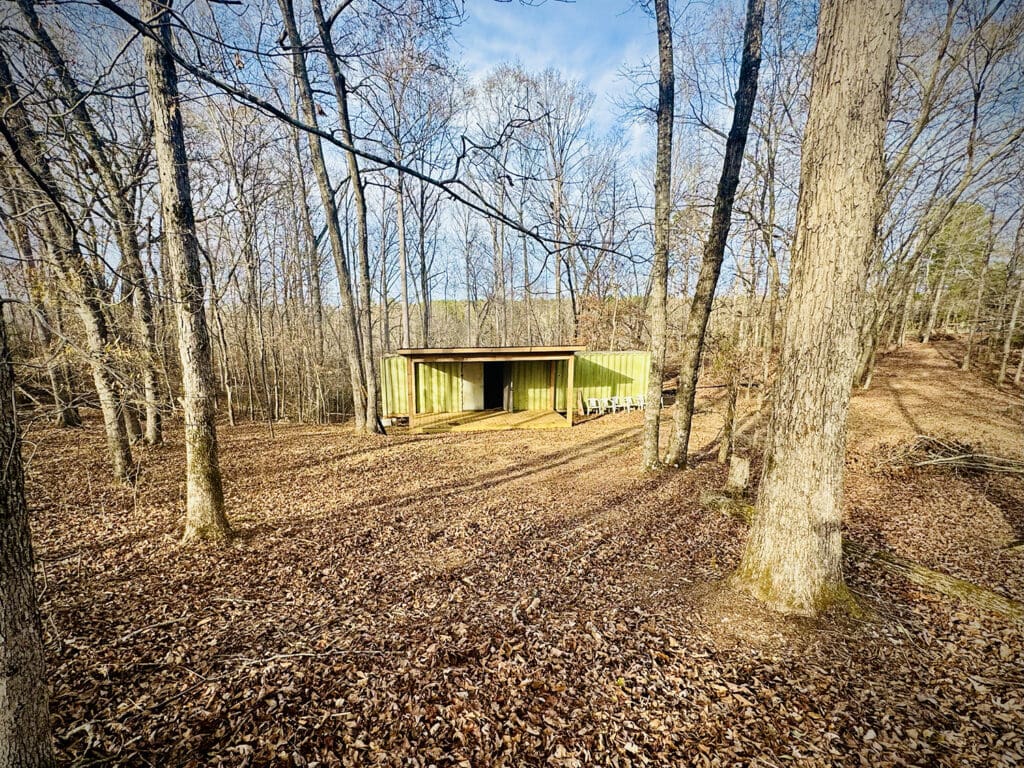
The Bus Shed served as John and Lisa’s tent on late nights.
1998–2003
Sheds & Songs
John continued with smaller projects like the cook shed, vendors shed and the Featherstone-Henge fire pit. He also obtained a pile of large rocks scrounged from the Highway 29 bridge in Cherokee County—these are the large rocks you see around the property.
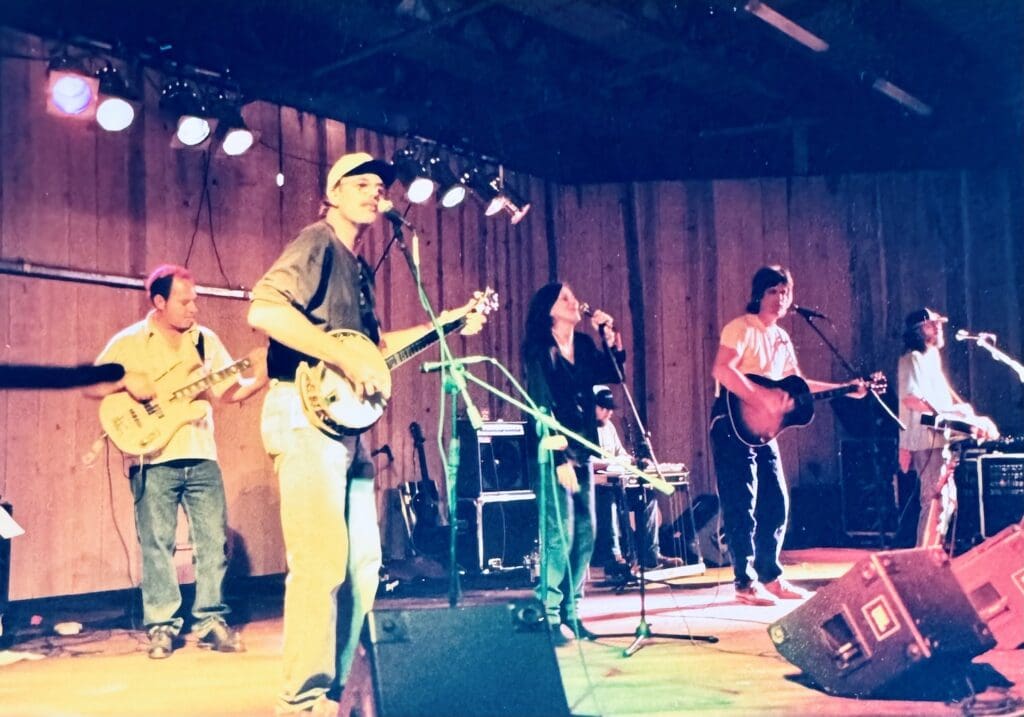
John and Lisa presented concerts featuring regional musicians like The Rank Outsiders, Seconds Flat, Gene & Wes Wyatt, Perry Road, Champ & Warren Hood and many others. They also hosted many other events, like the White Mansions presentation, annual Hat Matters parties, renowned Ground Hog Grunt gatherings and camping.
Perry Road, Music Camp’s house band, performing on the Greenfield stage.
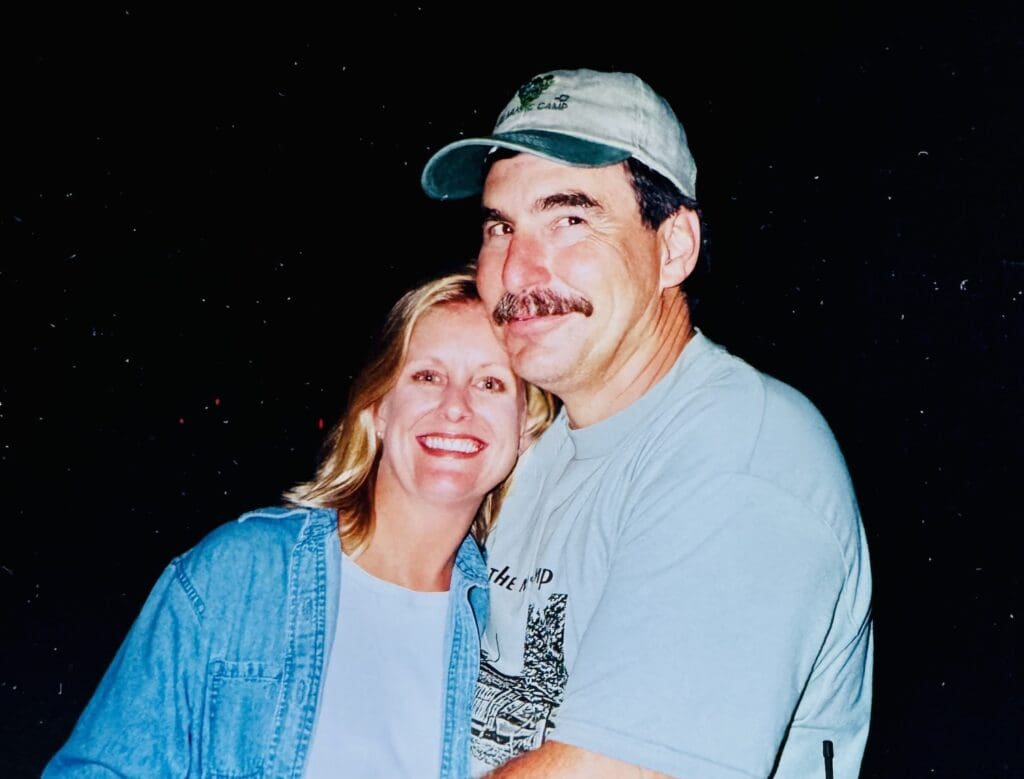
John and Lisa Featherston, Co-Founders of Stone Man Park and The Music Camp
2004–2024
Sharing the Stage
While John and Lisa stopped promoting events, they continued to host parties. Various groups and businesses rented the space for private and community events, including concerts, festivals, weddings, reunions and parties .
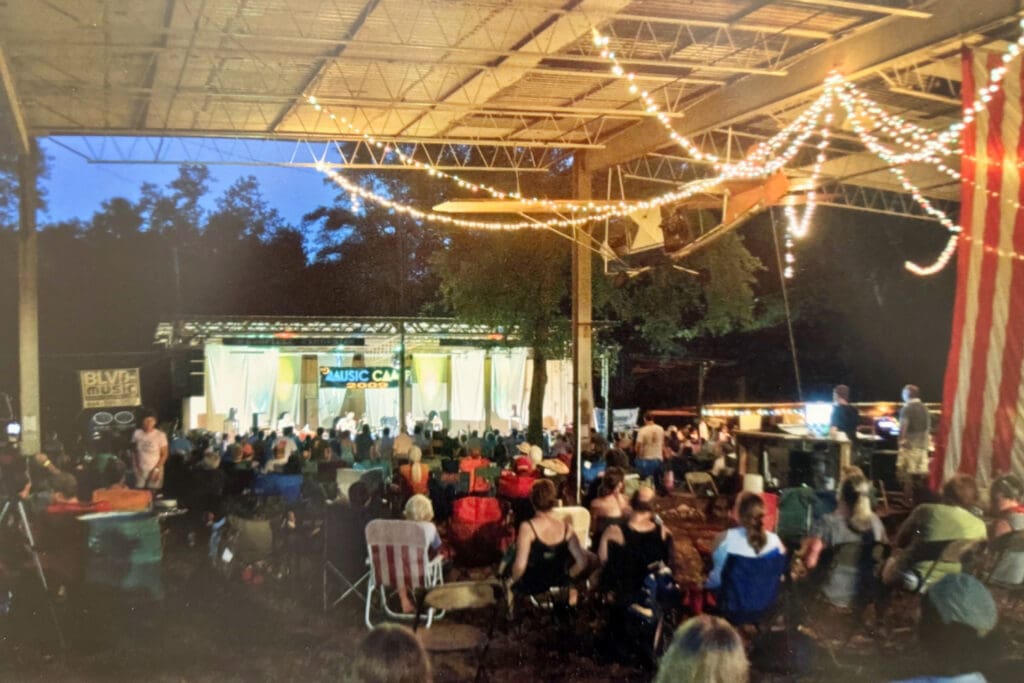
Music Camp on the Greenfield Excursion stage, 2009.
2015
New Stage & Festival
The Elizabeth Cotten Stage was built. The Antibodies moved the Green Earth Festival to the property and renamed the event Dog Days.
Musicians at the Dog Days festival on the Elizabeth Cotten Stage.
2020
A Busy Year of Building
We spent the year expanding the grounds, turning scrounged materials into permanent landmarks.
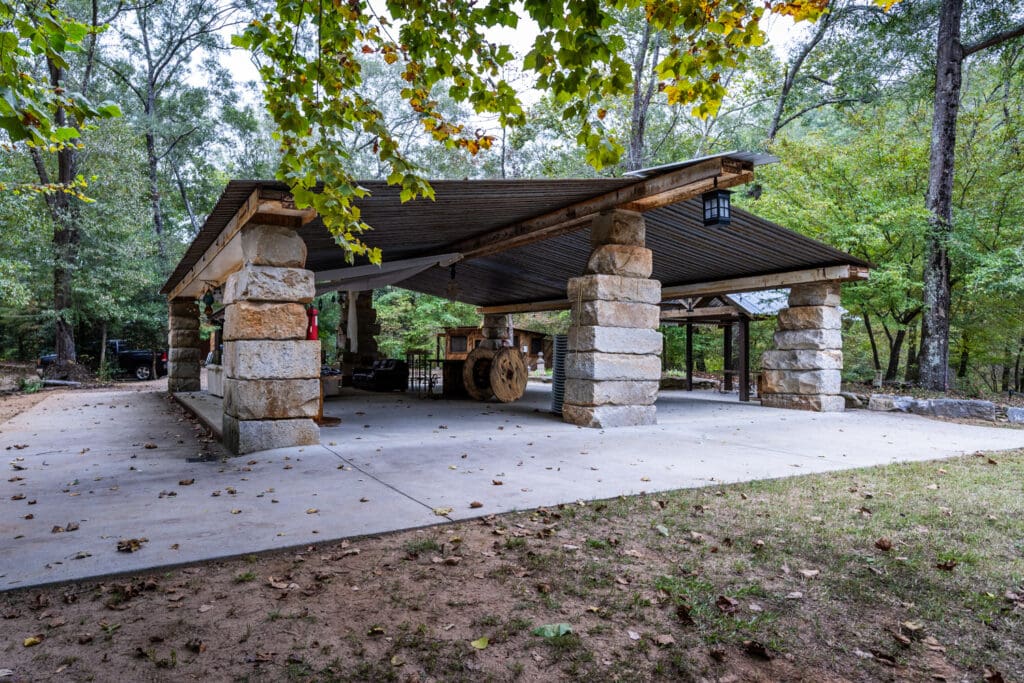
Stones Pavilion (a Rolling Stones tribute) was built out of railroad rocks and discounted heavy roofing.
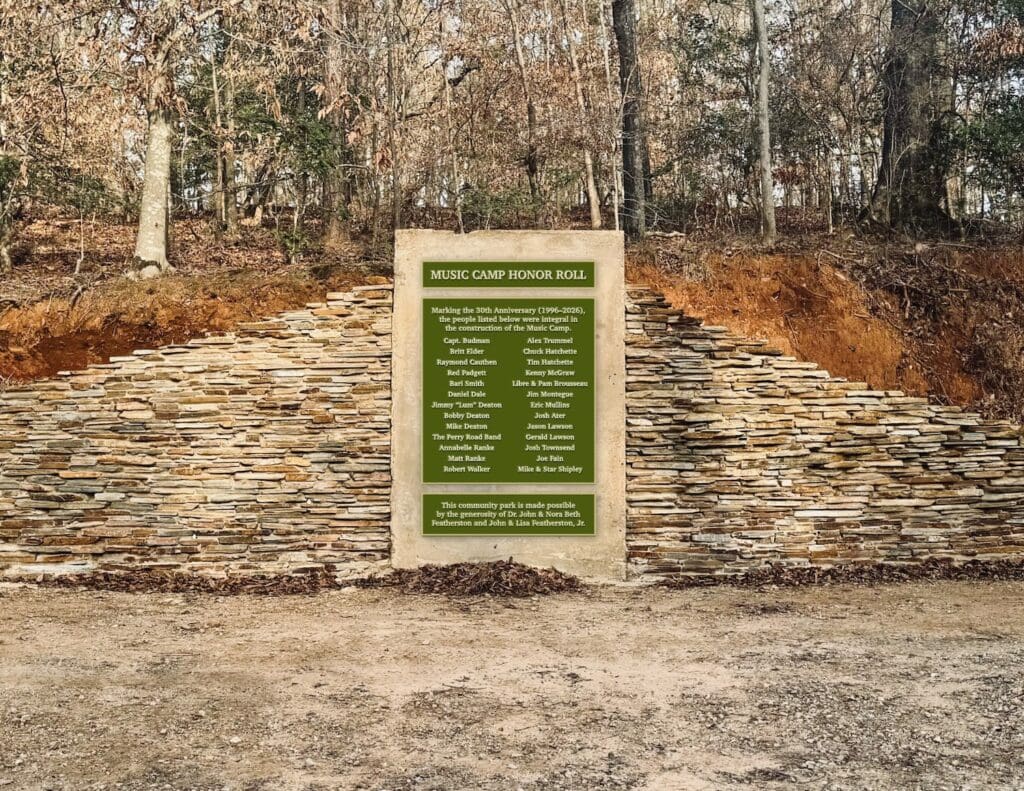
Prep shed was built from scrounged materials and cedar posts from the Woodshop (a long-running guys’ escape). There’s a tribute wall to the deceased Woodshop guys overlooking the river.
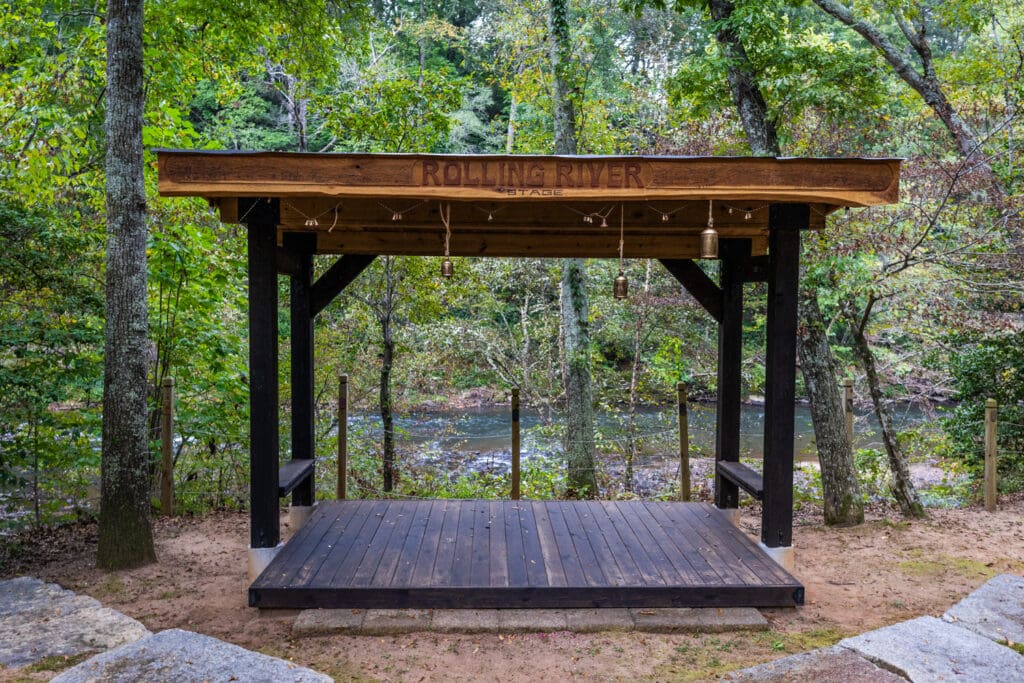
The Rolling River Stage (a Tina Turner tribute) was built, creating a small amphitheater overlooking the rapids.
2022
Fireflies
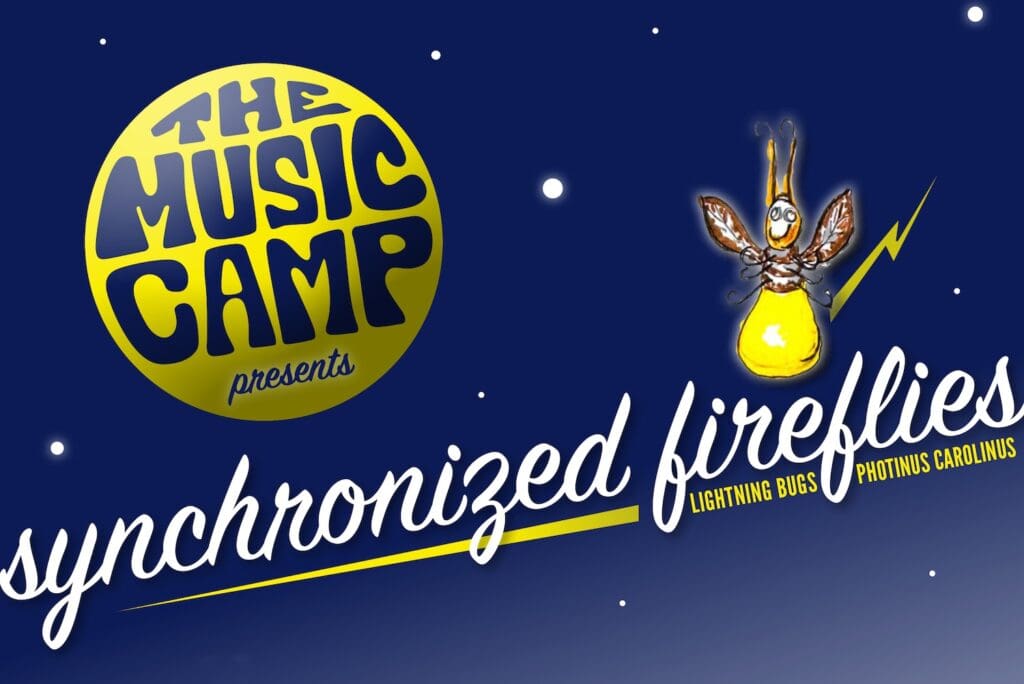
Hosted the first annual Fireflies gathering.
Fireflies event art by John Featherston.
2023
Expanding Our Grounds
Purchased the Bruckner Building and an additional 21 acres of property.
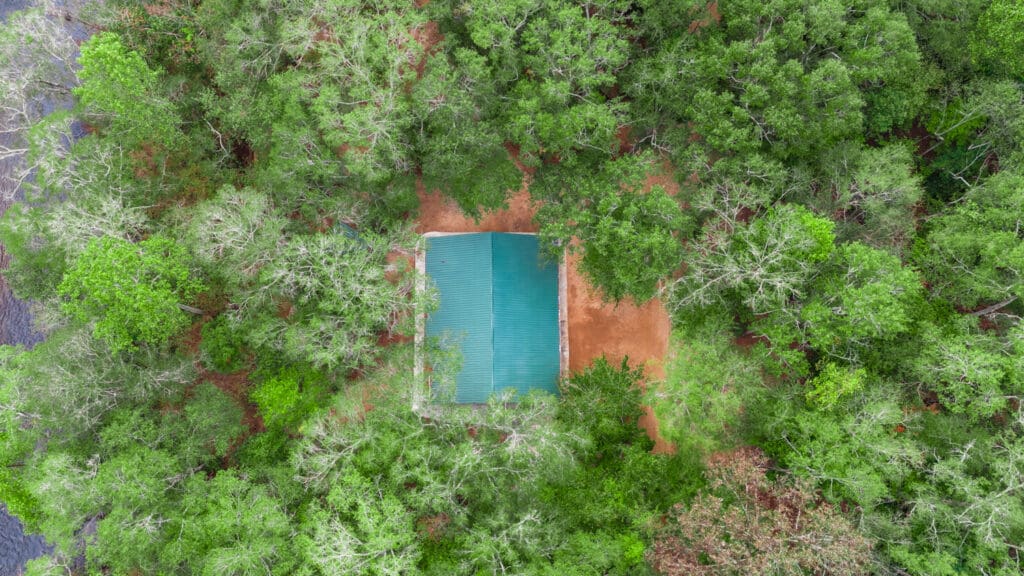
A view from above of a portion of Stone Man Park.
2024
A Name is Born
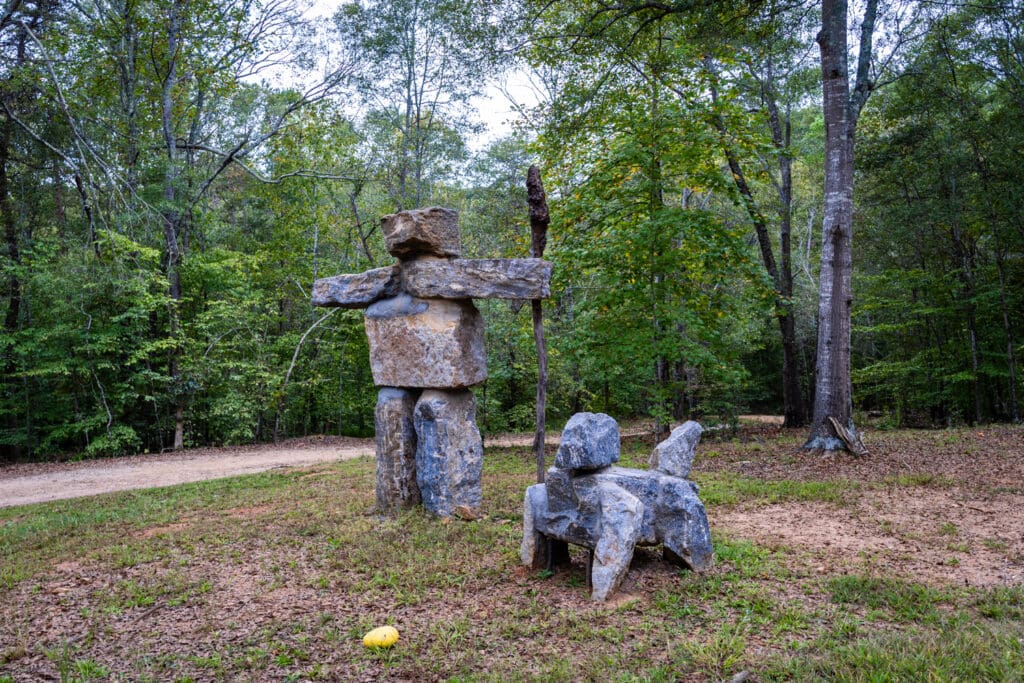
After constructing the Stone Man statue, we realized it perfectly captured the spirit of the land. Like John, the Stone Man seemed happiest forging trails in nature with a dog by his side. It was only fitting that the park took its name from this new guardian of the woods.
The Stone Man statue stands near the entrance of Stone Man Park
2025
Ready for the Reveal
As we prepared to officially open the gates to the community, the building didn’t stop. John turned challenges into art—repurposing materials and even trees felled by Hurricane Helene to create the park’s newest landmarks.
Built the Troxie statue.
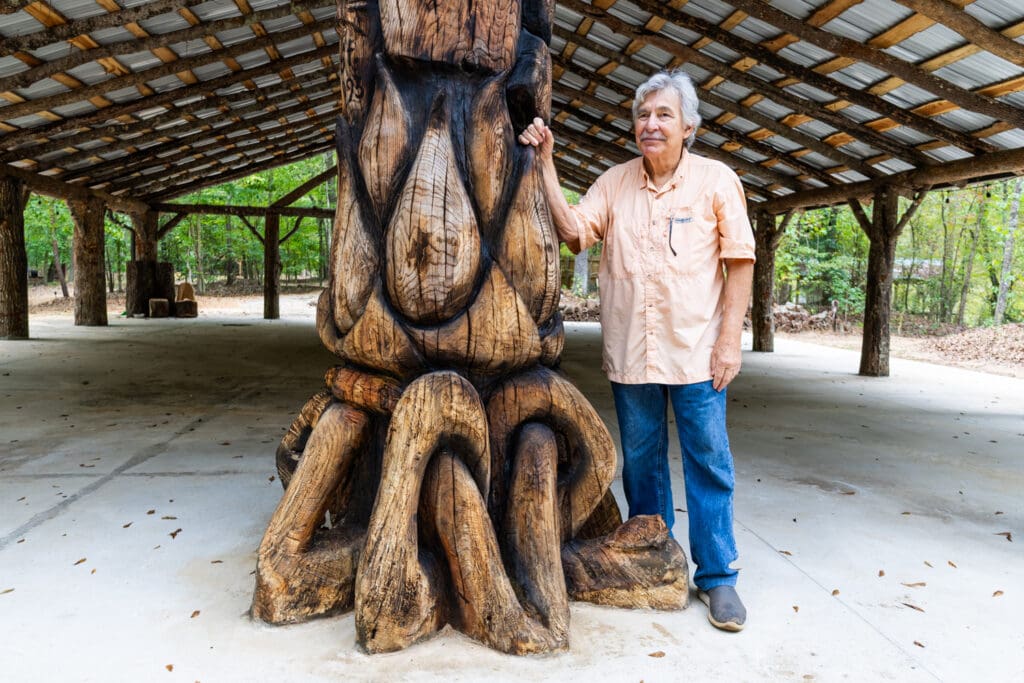
Built the Under Oaks Trees Pavilion (a memorial to oak trees felled by Hurricane Helene featuring a carved totem).
Built the Hurricane Stage
Built the Amphitheater
2026
30 Year Anniversary
2026 marks the 30 year anniversary of Stone Man Park and the year we take it public for all to enjoy.
Built the Music Camp Volunteer Honor Wall.
Be Part of the Next Chapter
The park’s 30-year history was built on friendship, repurposed materials and a lot of creative energy. Now, as we transition from a private music camp to a public park for all, our story is just beginning. We invite you to be part of what comes next.